Surbhi and Dale’s Beautiful Mehndi Celebration
On Tuesday, I will have the enormous pleasure of photographing the wedding of Surbhi and Dale. Their celebrations will include not one, but two wonderful wedding ceremonies: a traditional British ceremony followed by a traditional Hindu ceremony. It promises to be an incredibly colourful, meaningful and emotional occasion, bringing together different traditions, cultures and families in one unforgettable celebration.
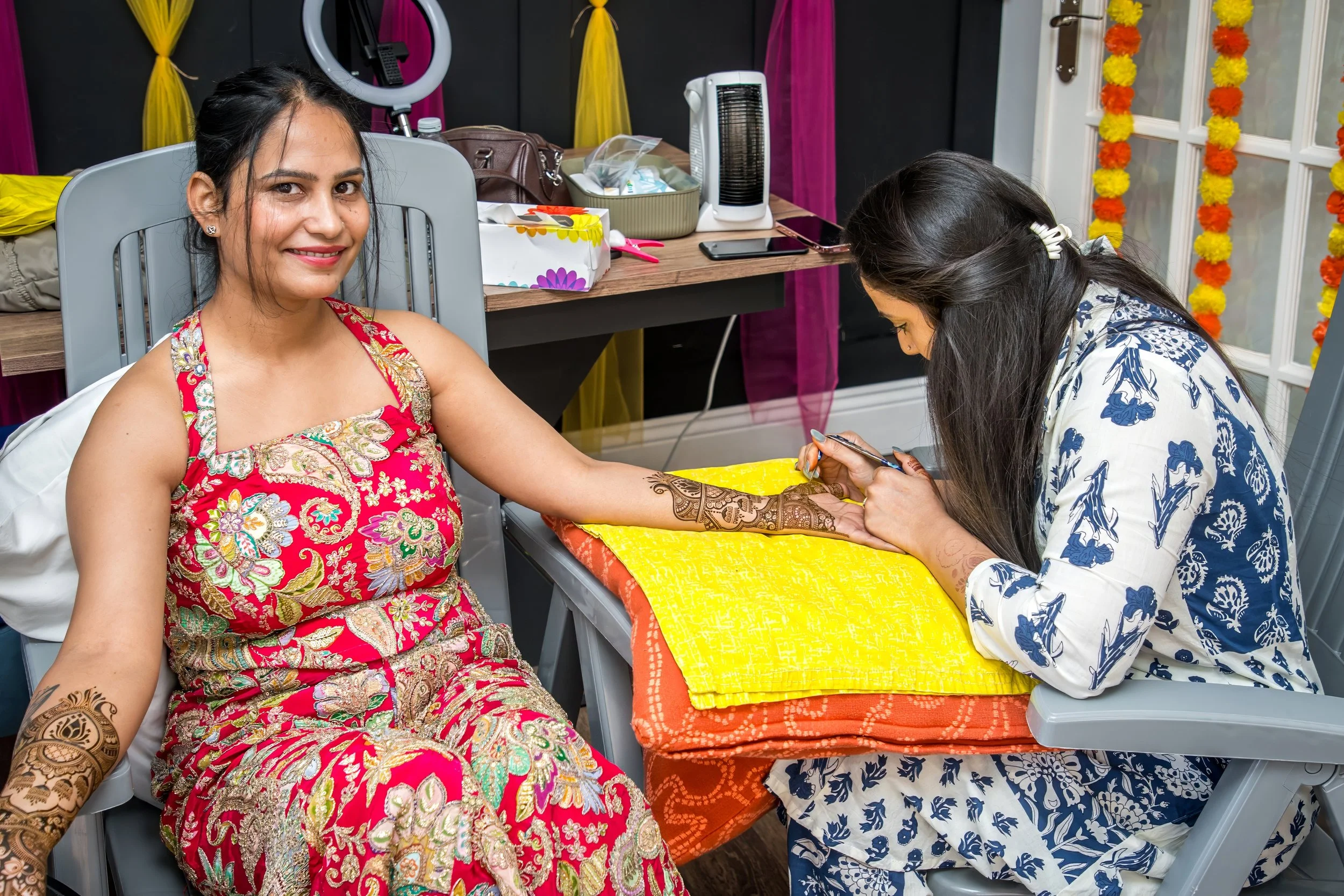
The wedding festivities began today when I visited Surbhi and Dale’s family home to photograph their beautiful Mehndi ceremony, often known as the henna ceremony. This was the first of several special occasions taking place across the three days leading up to and including the wedding itself.
As soon as I arrived, there was a wonderfully relaxed and welcoming atmosphere. Members of both families had gathered together to enjoy the celebration, talk, laugh and take part in a tradition that has been passed down through generations. It was immediately clear that this was much more than simply having decorative patterns applied to the skin. It was a chance for everyone to spend time together, celebrate the upcoming marriage and share in an important cultural tradition.
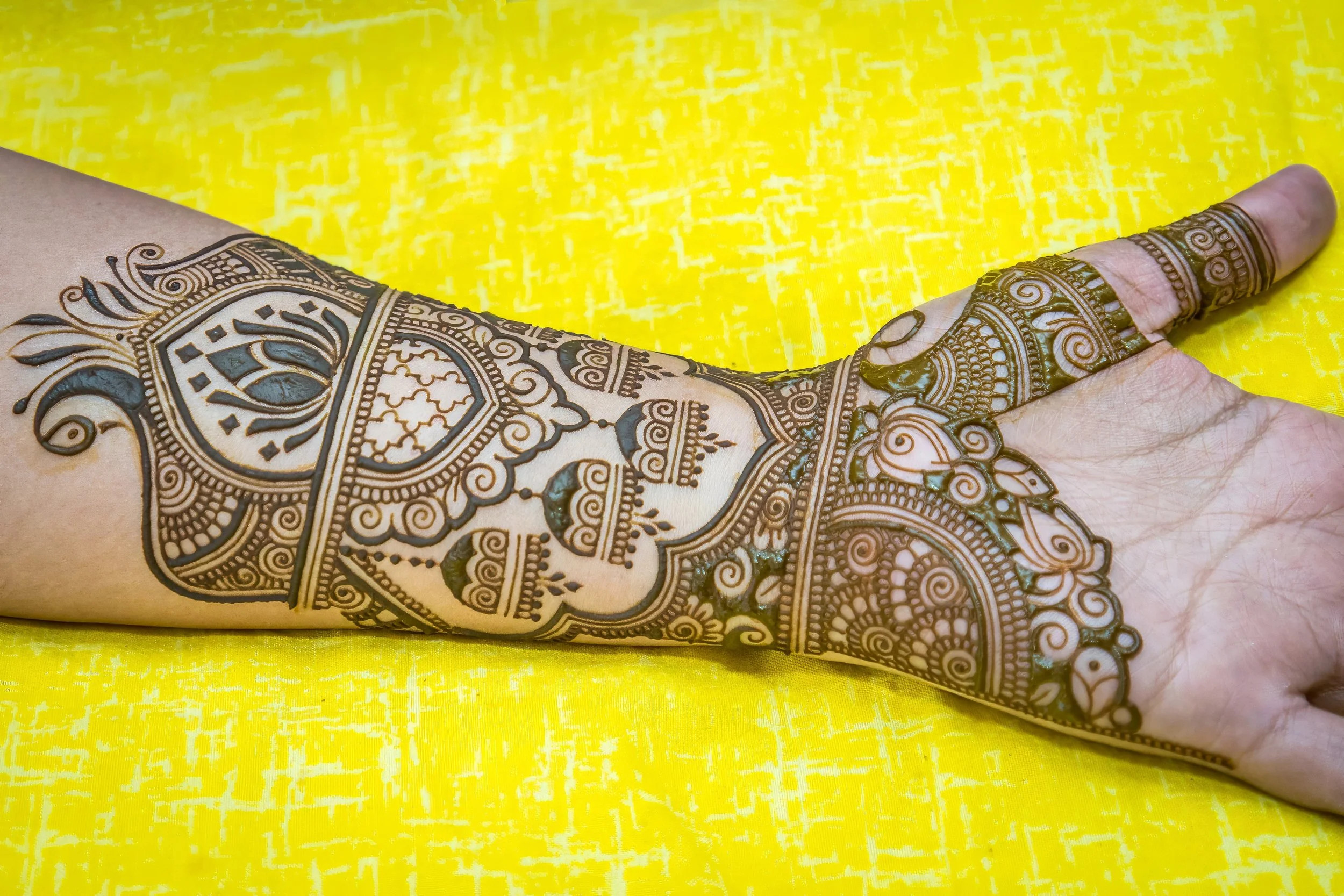
For those who may not be familiar with a Mehndi ceremony, it is a pre-wedding celebration during which a paste made from the henna plant is carefully applied to the hands, arms and sometimes the feet. The paste is used to create incredibly detailed patterns, including flowers, leaves, vines, swirls, shapes and other decorative symbols.
Although they are sometimes described as henna tattoos, they are not permanent tattoos. The henna paste temporarily stains the upper layers of the skin, leaving behind a rich orange, red or brown design. The patterns gradually become darker after the dried paste has been removed and will usually remain visible for one or two weeks before naturally fading.
Henna has a long and fascinating history. It has been used for thousands of years across South Asia, the Middle East and North Africa, both as a form of decoration and as part of cultural and religious celebrations. The henna plant thrives in warm climates, and its leaves can be dried and ground into a fine powder. When mixed with liquid, the powder creates a paste that releases a natural dye capable of staining the skin.
Over time, the use of henna became closely associated with weddings and other important celebrations. In Hindu wedding traditions, Mehndi is considered a symbol of beauty, happiness, love and good fortune. The ceremony is an opportunity to bless the bride as she prepares to begin a new chapter of her life.
There are also many traditional beliefs and customs connected to bridal Mehndi. In some families, the depth and richness of the henna colour is said to represent the strength of the love between the bride and groom. Another playful tradition involves hiding the groom’s name or initials somewhere within the bride’s detailed designs. The groom may then be challenged to find them after the ceremony.
Whether these customs are followed seriously or simply enjoyed as part of the fun, they add another personal and memorable element to the celebration.
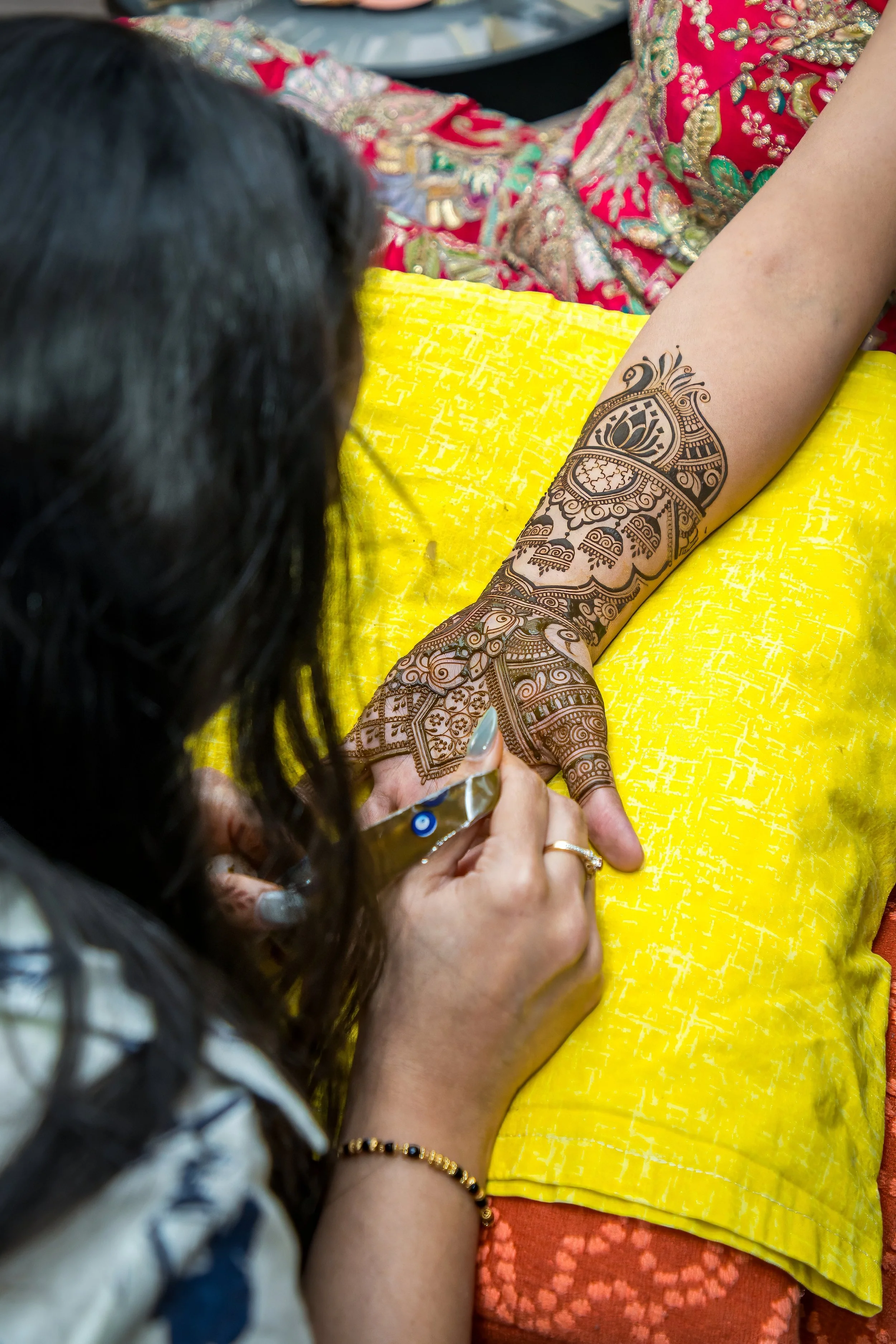
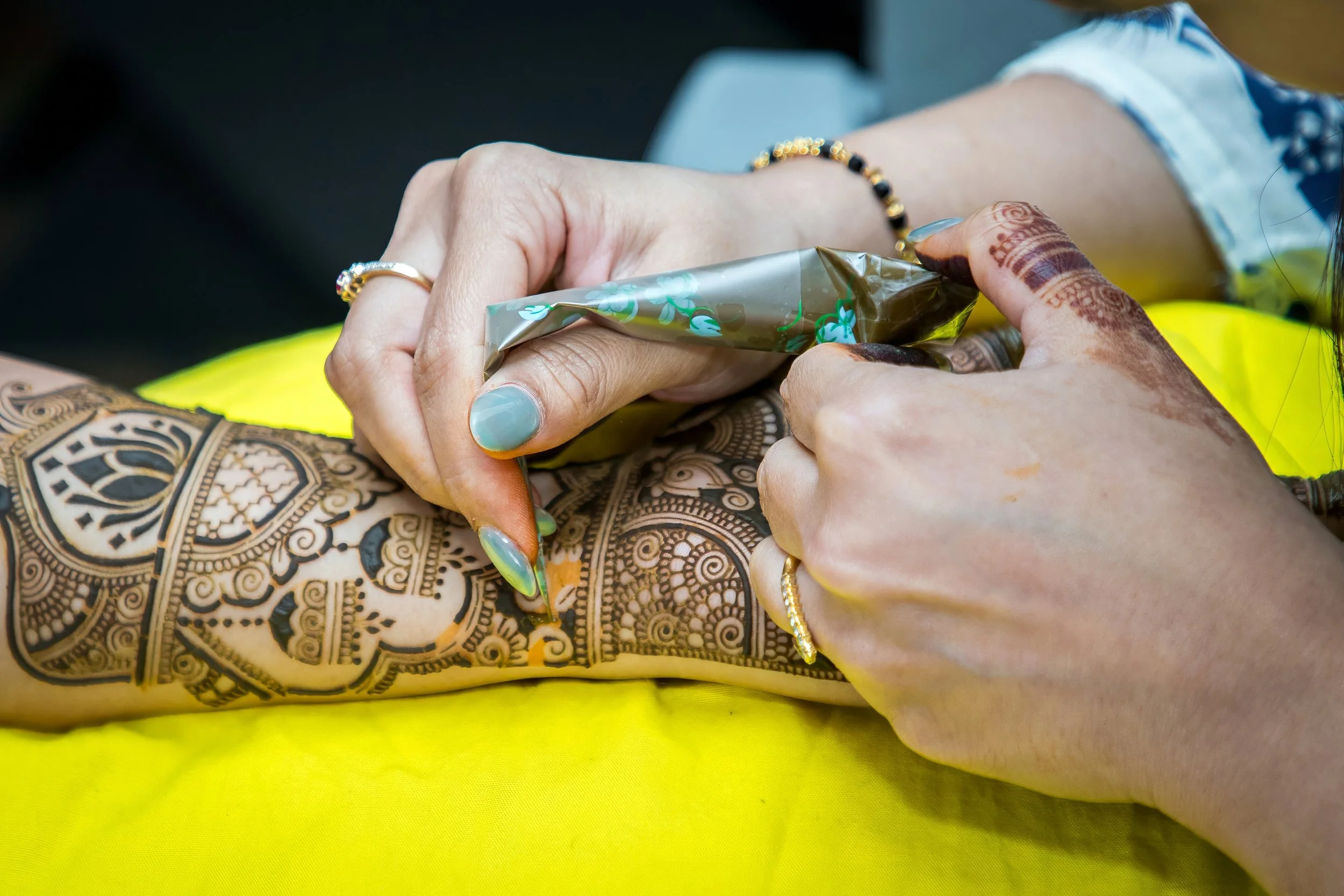
The application of bridal Mehndi requires an extraordinary amount of patience, concentration and artistic skill. The designs can take several hours to complete, particularly when they cover the bride’s hands, wrists and arms. Every line must be carefully placed, with the artist building the pattern piece by piece until the complete design is revealed.
Surbhi’s Mehndi was truly stunning.
The work across her hands and arms was incredibly elaborate, with layer upon layer of fine detail. From a distance, the designs looked beautifully balanced and elegant, but when viewed more closely, it was possible to appreciate just how much care had gone into every tiny line, curve and pattern.
The remarkable work was created by the extremely talented @creativemehendidesignsbykajal. Watching such intricate designs being created by hand was fascinating. There was no room for error, yet every section appeared to flow effortlessly into the next.
The symmetry, precision and imagination involved were astonishing. It is easy to understand why professional Mehndi artists are held in such high regard. This is not simply decoration; it is a highly specialised art form that requires experience, creativity and an exceptionally steady hand.
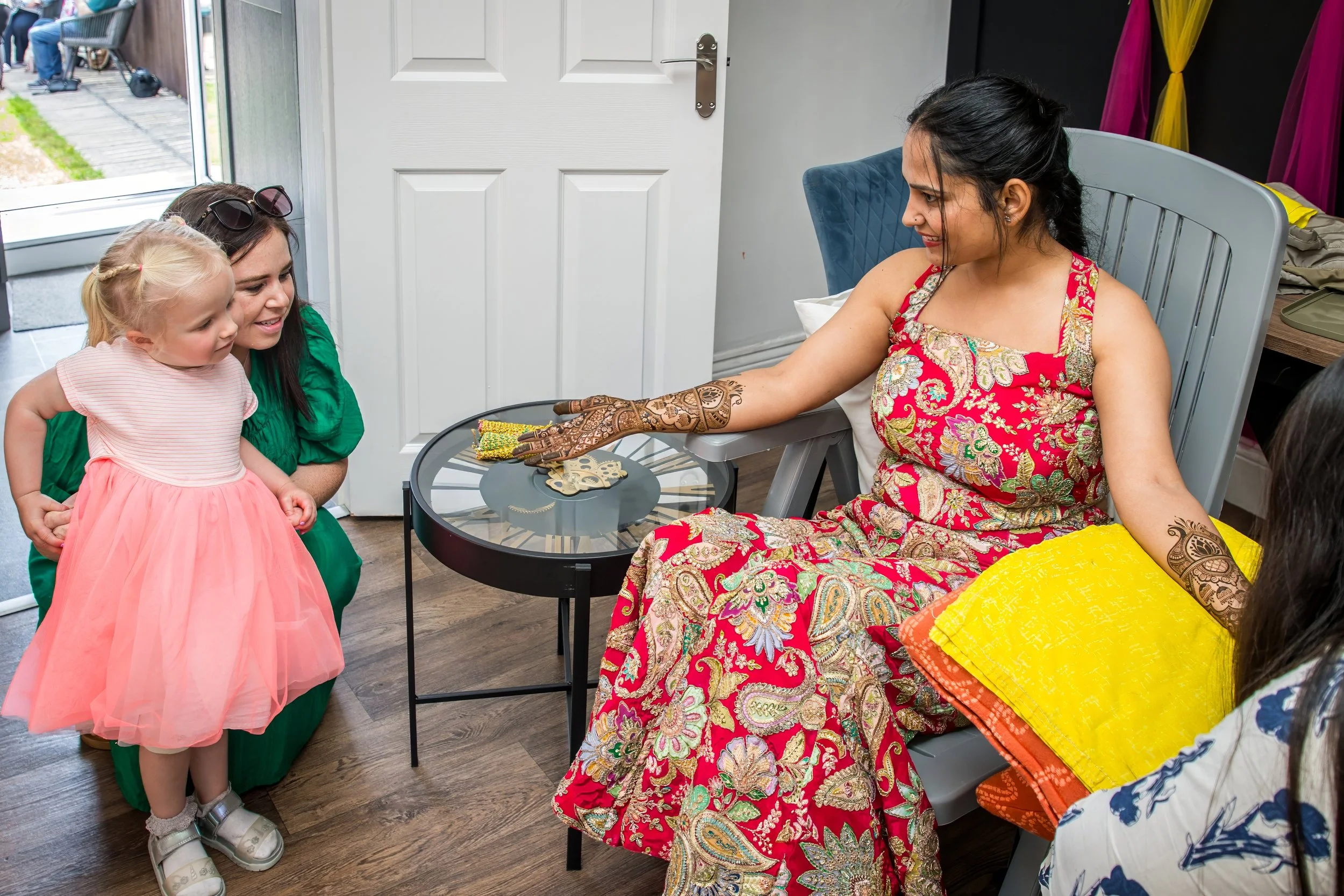
Surbhi looked wonderful as the designs began to take shape. Photographing the process gave me the opportunity to capture not only the completed artwork, but also the concentration of the artist, the anticipation on Surbhi’s face and the reactions of the family members around her.
The smaller details are often what make occasions like this so memorable. The careful movement of the henna cone, the fresh paste resting on the skin, the laughter between relatives and the sight of family members comparing their finished designs all helped to tell the story of the celebration.
Members of both Surbhi and Dale’s families were also given their own ornate henna designs. This made the occasion feel wonderfully inclusive, allowing everyone to take part rather than simply observe. Each design was slightly different, giving every person something individual to enjoy and remember.
There was plenty of laughter as people chose their patterns, held out their hands and tried not to move while the henna was being applied. Once the designs were finished, everyone had to be careful while the paste dried, which naturally created a few amusing moments as people attempted to eat, drink and continue conversations without smudging their hands.
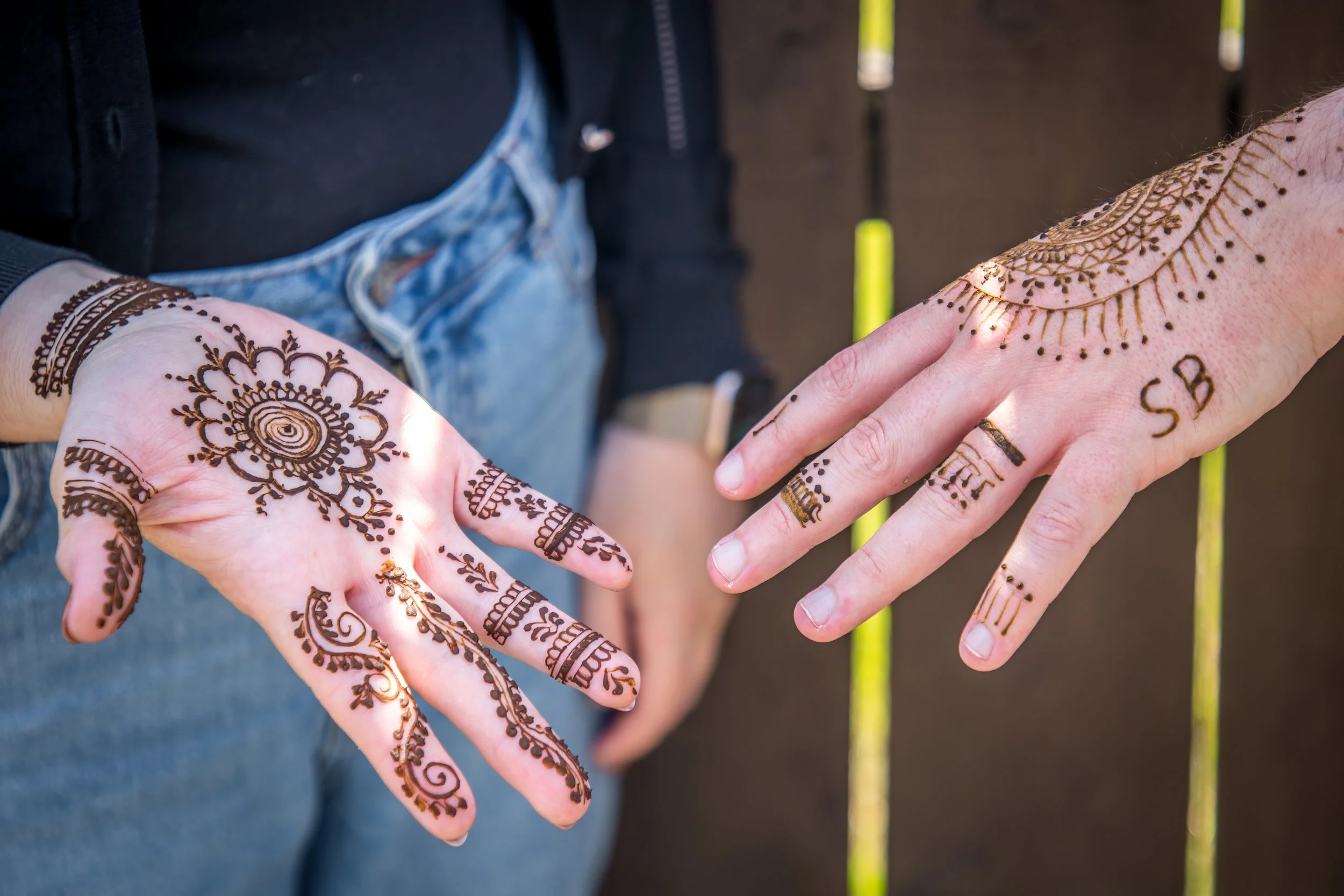
As a wedding photographer, I am always looking for genuine moments, natural expressions and the little interactions that show the relationships between people. The Mehndi ceremony offered these moments in abundance.
There were beautiful photographs everywhere I looked: hands held out proudly to display completed designs, relatives helping one another, quiet moments of concentration and bursts of laughter shared across the room. The atmosphere was warm, joyful and filled with excitement for the celebrations still to come.
It was also a privilege to be welcomed into the family home and trusted to document such a meaningful occasion. Photographing cultural weddings gives me the opportunity to experience traditions that are rich in history, symbolism and emotion. Every ceremony has its own meaning, and every family brings its own personality to the occasion.
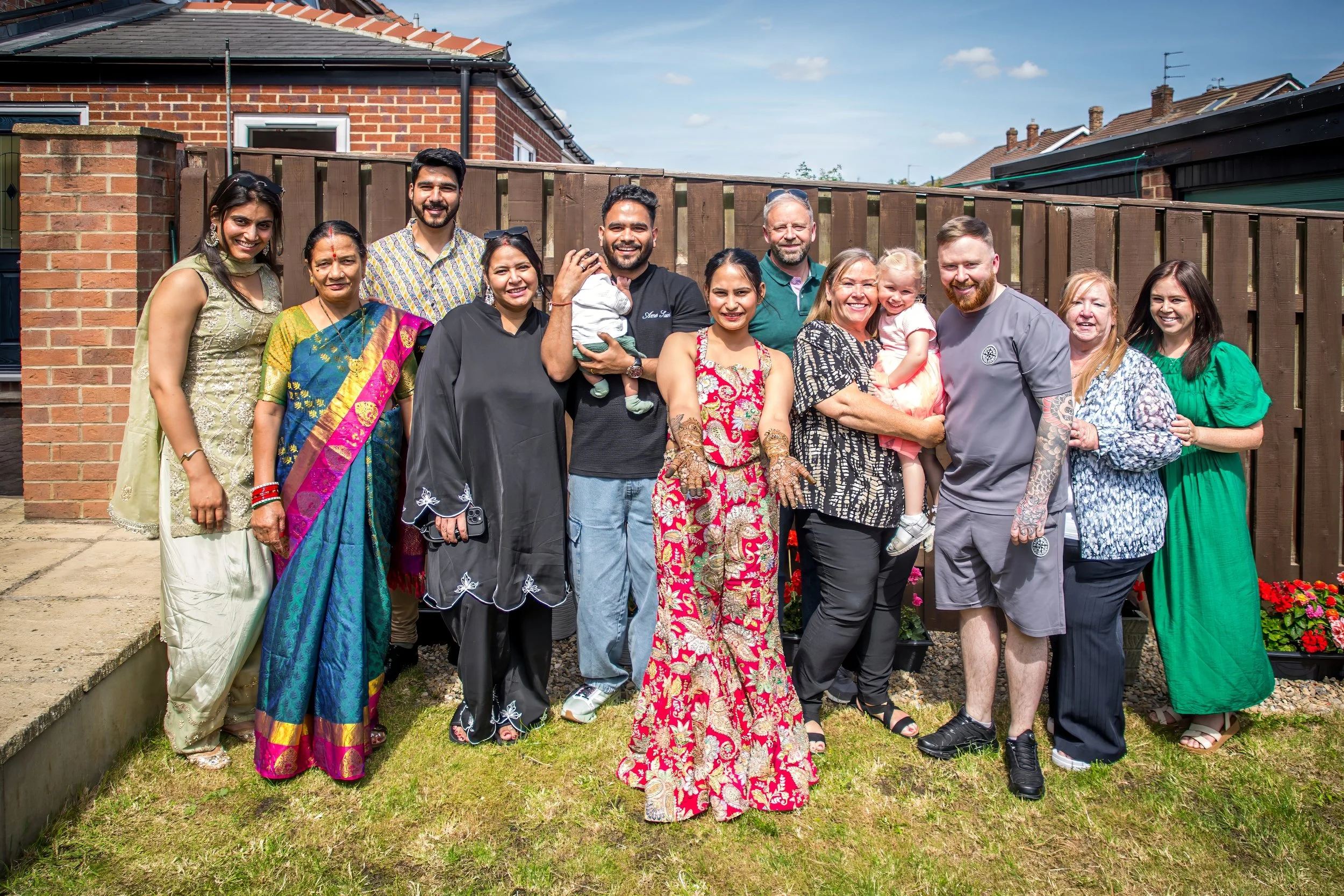
Today’s Mehndi celebration was the perfect beginning to Surbhi and Dale’s wedding festivities. It brought both families together, honoured a centuries-old tradition and created a relaxed, colourful and joyful atmosphere ahead of the main wedding day.
On Monday, I will return to photograph the Haldi ceremony, during which turmeric paste will be applied to the bride and groom as a symbol of purification, protection and blessing. Then, on Tuesday, the celebrations will continue at Blackwell Grange Hotel with the traditional British wedding ceremony followed by the Hindu ceremony.
After experiencing the warmth and excitement of today’s celebration, I cannot wait to see what the next two days will bring.
Congratulations to Surbhi and Dale as they begin this wonderful journey towards their wedding day. It was a genuine pleasure to photograph the first chapter of their celebrations, surrounded by family, laughter, tradition and the breathtaking artistry of Mehndi.